Polish New Year
I know that New Year's Day was like a month and a week ago, but if I wait until before next new year, I will no longer be in this class, so here we go! As I explained in my intro post, my Grandmother on my dad's side is one hundred percent Polish. She is an amazing cook, but she has a few signature dishes that she likes to make time and time again. On New Years's specifically she always makes the traditional Polish New Years meal for my family.
A little history behind this tradition is that the Polish have deemed certain foods to bring luck in the New Year, and also certain foods that should be avoided because they might cause bad luck. The first food that is often eaten because it represents wealth and prosperity is cabbage. The more logical reason behind why cabbage is a popular Polish New Years dish is because of its growing season. Cabbage is harvested in the late fall and then often brined to make sauerkraut, which would be ready by the time New Year's hits. My Grandma always prepares cabbage for our New Year's meal, and insists that everyone have at least a piece.
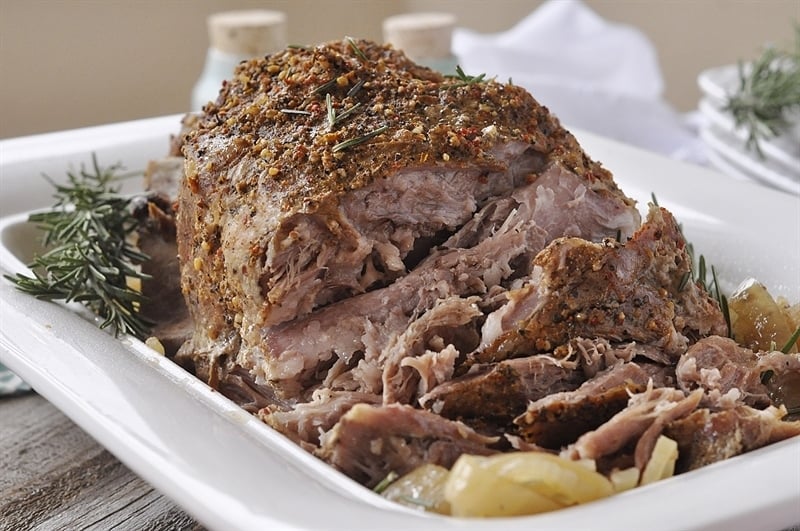
Another very important staple food for a Polish New Year is pork. Pork again represents wealth and prosperity because of its rich fat content, so it must be present in some form at New Years dinner. My Grandma usually includes pork in the form of a pork roast that she cooks in the crock pot all day.
Some of the other foods that are present at my Grandma's New Year dinner are not necessarily tied to any specific Polish belief or history, but instead have become my Grandma's signature foods. Driving out to my grandparents house I list off the foods to my dad and sister that I know will be sitting on the table when we arrive. Corn or carrots, a salad with Italian dressing (or as my Grandma pronounces it "eyetalian" which always drove my mom crazy because as I have explained my mom's side of the family is all Italian), crescent rolls (that my Grandma usually has me make when I arrive so that they are nice and hot), and always some type of dessert, because my Grandma is where I get my sweet tooth from.
Fish is another important to the Polish on New Year's. While we do not typically have any fish present at New Years Day dinner, my grandparents always go out to a fancy seafood restaurant on New Years eve to get their seafood fix. In the Polish tradition fish "especially those with silver scales" (Polish New Years traditions) is also thought to bring wealth in the new year (I'm sure you see a pattern developing here, basically ever food represents some sort of wealth or prosperity to the Polish).
As I explained, the extra sides that go along with our New Year's meal are not necessarily Polish staples, but instead Grandma Reed staples. So I will give you the rundown on the rest of the typical foods that you would find at a Polish New Years in case you ever want to be Polish for a year!
Poppy seeds are generally considered to be a lucky food in Poland, so they are often found in some form in the New Years cuisine. Lastly for dessert, ring shaped cookies are served because they represent "the year coming full circle and eternity" (Polish New Years traditions).
I hope that I have enlightened you on some of the traditional (wealth related) symbolic foods of the Polish culture, and that one day you too might decide to have a Polish New Year!
A little history behind this tradition is that the Polish have deemed certain foods to bring luck in the New Year, and also certain foods that should be avoided because they might cause bad luck. The first food that is often eaten because it represents wealth and prosperity is cabbage. The more logical reason behind why cabbage is a popular Polish New Years dish is because of its growing season. Cabbage is harvested in the late fall and then often brined to make sauerkraut, which would be ready by the time New Year's hits. My Grandma always prepares cabbage for our New Year's meal, and insists that everyone have at least a piece.
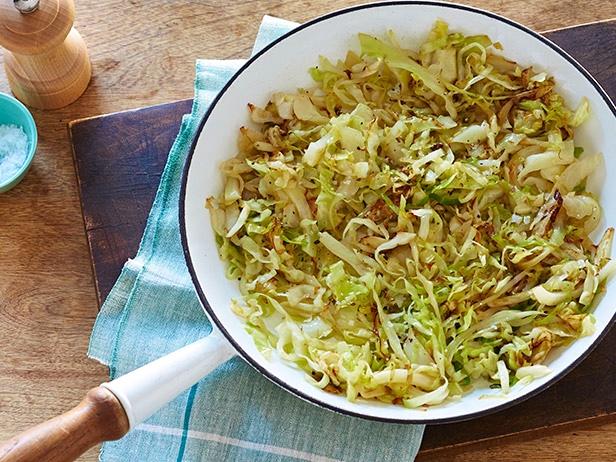 |
| Cabbage |
Another very important staple food for a Polish New Year is pork. Pork again represents wealth and prosperity because of its rich fat content, so it must be present in some form at New Years dinner. My Grandma usually includes pork in the form of a pork roast that she cooks in the crock pot all day.
 |
| Pork Roast |
Some of the other foods that are present at my Grandma's New Year dinner are not necessarily tied to any specific Polish belief or history, but instead have become my Grandma's signature foods. Driving out to my grandparents house I list off the foods to my dad and sister that I know will be sitting on the table when we arrive. Corn or carrots, a salad with Italian dressing (or as my Grandma pronounces it "eyetalian" which always drove my mom crazy because as I have explained my mom's side of the family is all Italian), crescent rolls (that my Grandma usually has me make when I arrive so that they are nice and hot), and always some type of dessert, because my Grandma is where I get my sweet tooth from.
Fish is another important to the Polish on New Year's. While we do not typically have any fish present at New Years Day dinner, my grandparents always go out to a fancy seafood restaurant on New Years eve to get their seafood fix. In the Polish tradition fish "especially those with silver scales" (Polish New Years traditions) is also thought to bring wealth in the new year (I'm sure you see a pattern developing here, basically ever food represents some sort of wealth or prosperity to the Polish).
 |
| New Year's Eve Fish |
As I explained, the extra sides that go along with our New Year's meal are not necessarily Polish staples, but instead Grandma Reed staples. So I will give you the rundown on the rest of the typical foods that you would find at a Polish New Years in case you ever want to be Polish for a year!
Poppy seeds are generally considered to be a lucky food in Poland, so they are often found in some form in the New Years cuisine. Lastly for dessert, ring shaped cookies are served because they represent "the year coming full circle and eternity" (Polish New Years traditions).
I hope that I have enlightened you on some of the traditional (wealth related) symbolic foods of the Polish culture, and that one day you too might decide to have a Polish New Year!


Comments
Post a Comment